The History of Paper Money. The exhibition
The Fabriano Paper Mill still produces security papers, banknotes, and cheques today, just as it did more than 150 years ago.
“Since 1884, the firm Pietro Miliani, through its current owner and guarantor Cav. Giuseppe Miliani, entered into a business relationship with the Banca d’Italia for the manufacture of paper for bills of exchange. Beyond its long‑established reputation in the commercial world, the Miliani firm was already renowned for major supplies of security papers for the State, the issuing banks, and …”
This is how the 1901 report written by Giovanni Battista Miliani opens. This precious document, addressed to Commendatore Bonaldo Stringher, Director General of the Banca d’Italia, recounts a unique story deeply intertwined with the evolution of Italian paper money.
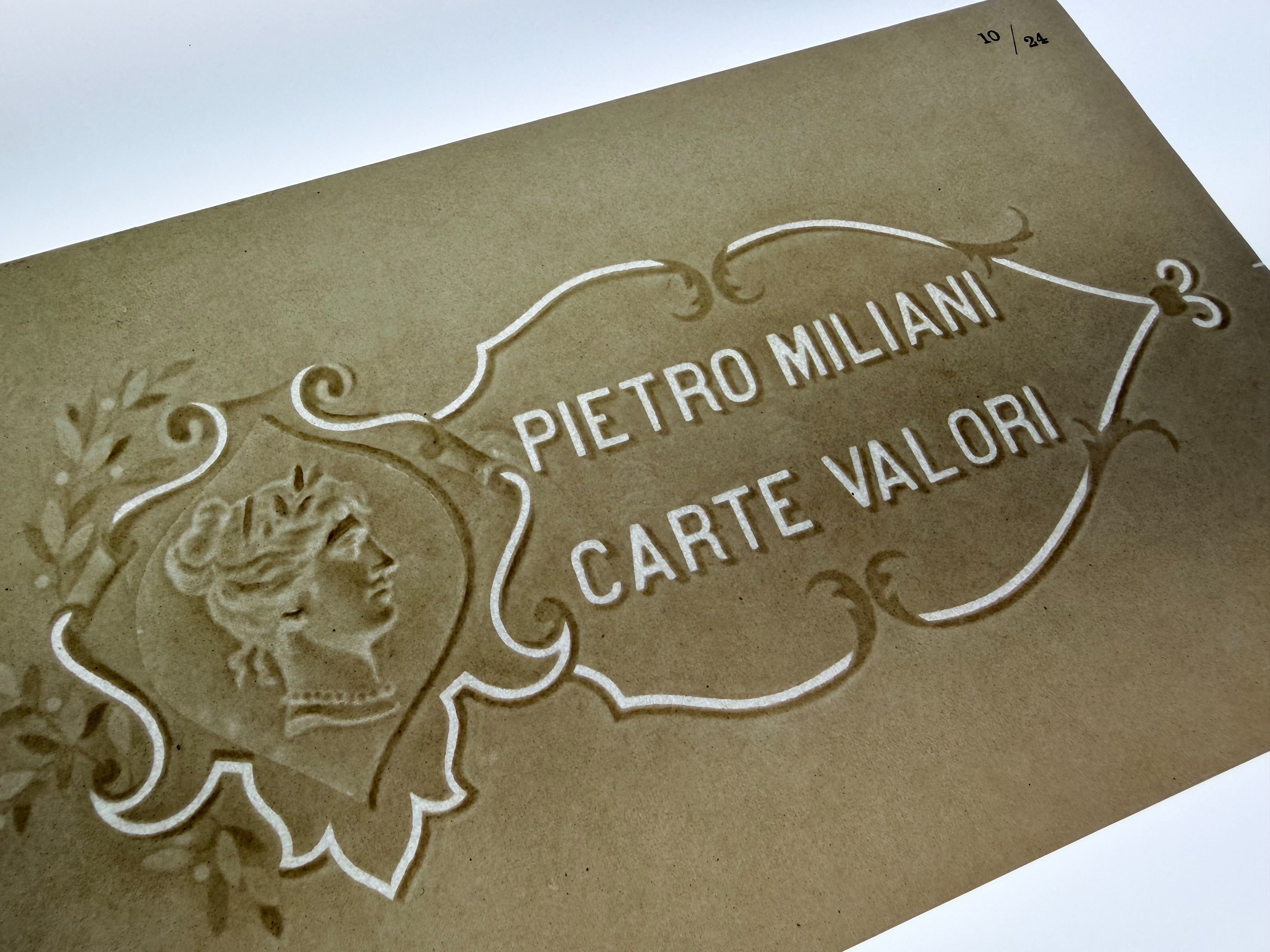
That story is once again in the spotlight in the exhibition "La cartamoneta in Italia. Dalle origini all'euro attraverso le banconote della collezione Intesa Sanpaolo“ ('Paper Money in Italy. From Its Origins to the Euro through the Banknotes of the Intesa Sanpaolo Collection'), held at the Casa Museo dell'Antiquariato Ivan Bruschi in Arezzo (Corso Italia 14) from 26 March to 24 May 2026.
The exhibition presents a comprehensive numismatic journey, curated by Dr. Franca Maria Vanni, tracing the evolution of banknotes in Italy—from the earliest issues to the single European currency.
Through the Archive of the Miliani Paper Mills, the Fondazione Fedrigoni Fabriano contributed to the exhibition with historic photographs and archival images that document Fabriano’s fundamental role in the production of security papers.
Promoted by the Ivan Bruschi Foundation and Intesa Sanpaolo, the exhibition showcases a selection of banknotes from the prestigious Intesa Sanpaolo collection, offering a compelling narrative enriched with documents and memories from Italy’s economic history.